ISP Triage CRM ties billing, RADIUS, gear, maps, tickets, and QoE together — software we built because we operate networks. Managed engineering is our primary business; the platform is optional when you want the same stack we use.
After engineering work, many clients consolidate here so billing, auth, and quality share one customer record.
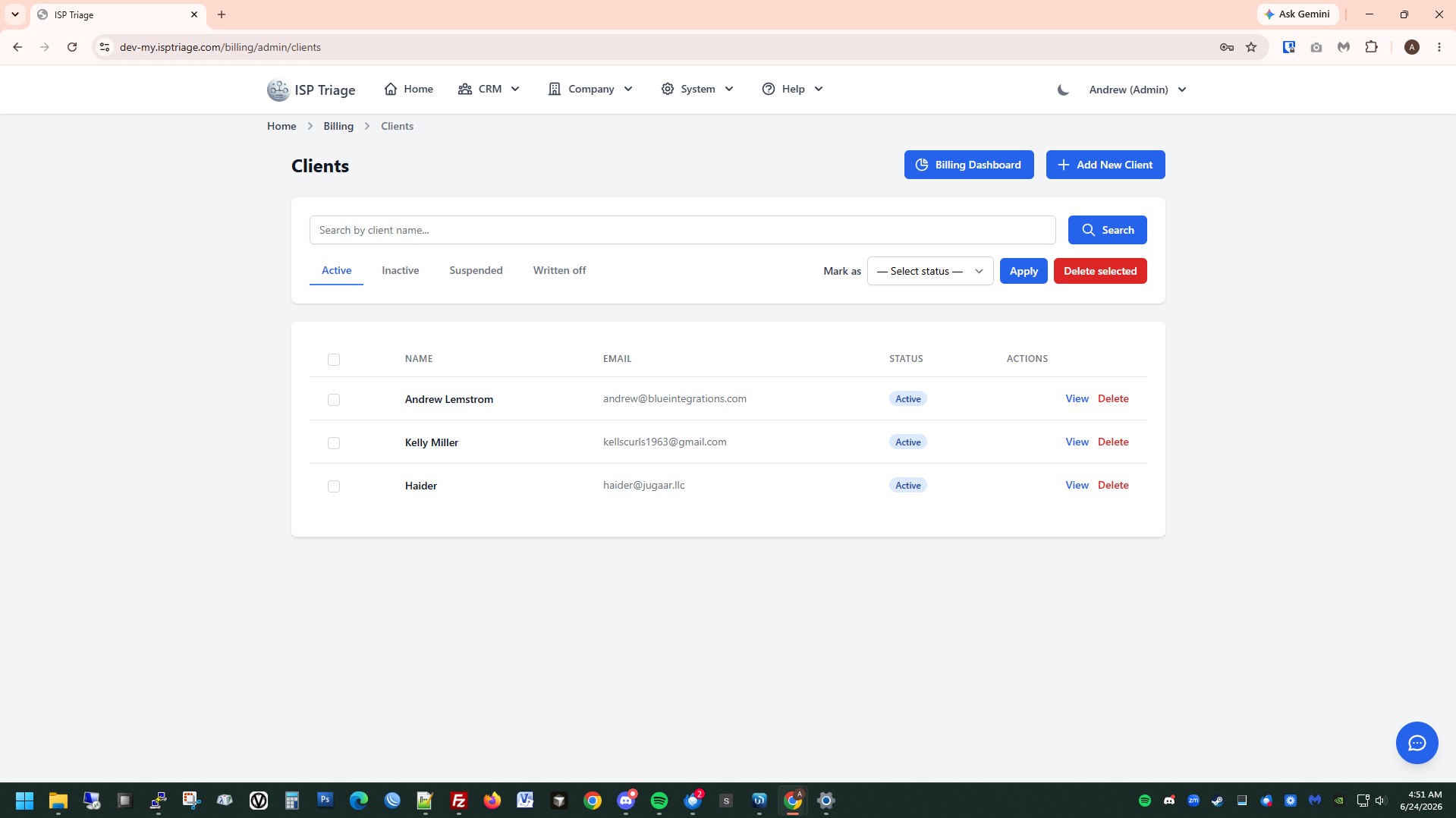
Customers, RADIUS, routers, maps, tickets, and billing share one system — not a patchwork of logins.
Automate invoicing, payments, and overdue status so your team focuses on exceptions, not data entry.
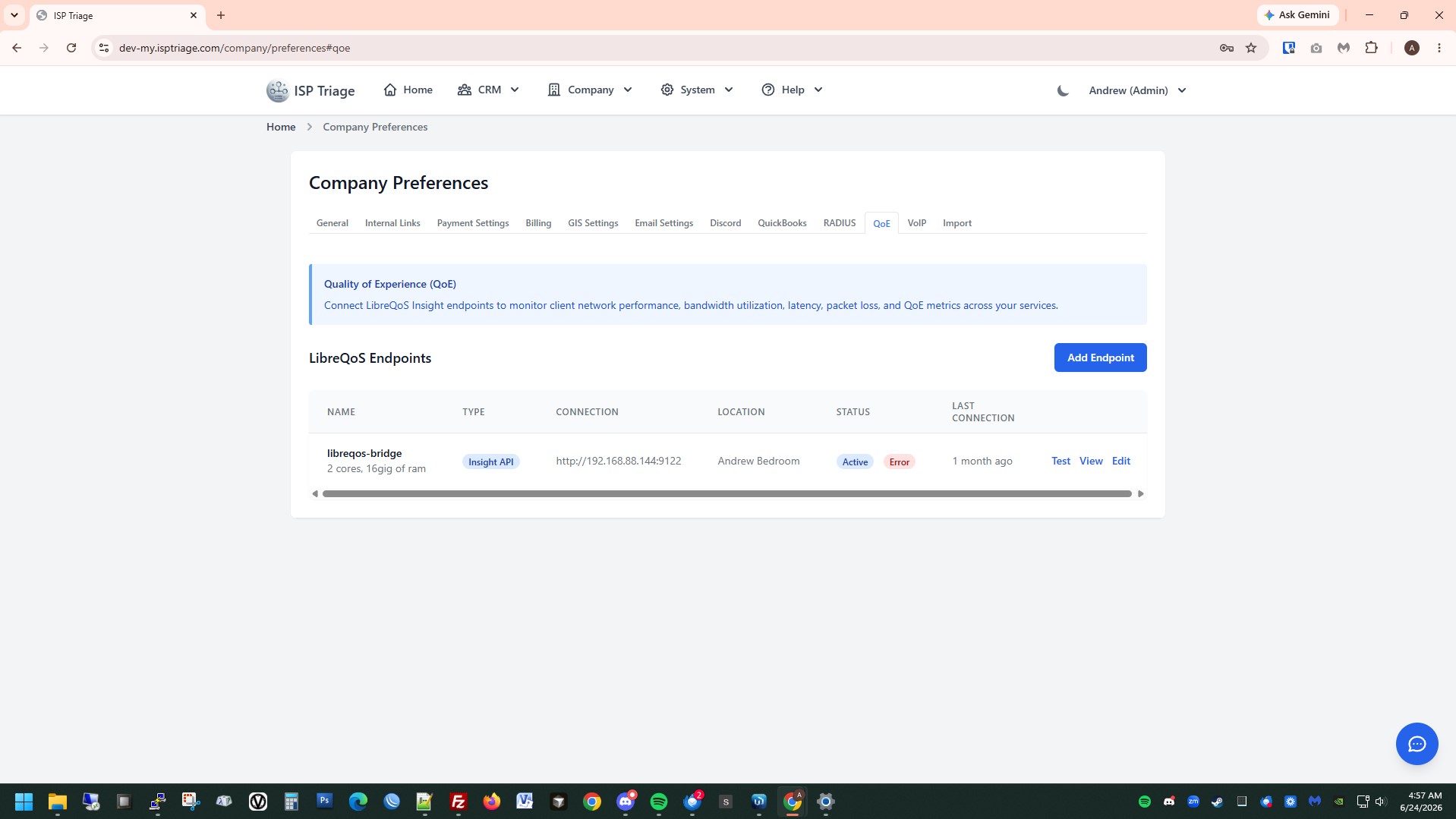
LibreQoS QoE scores turn quality drops into tickets before subscribers leave.
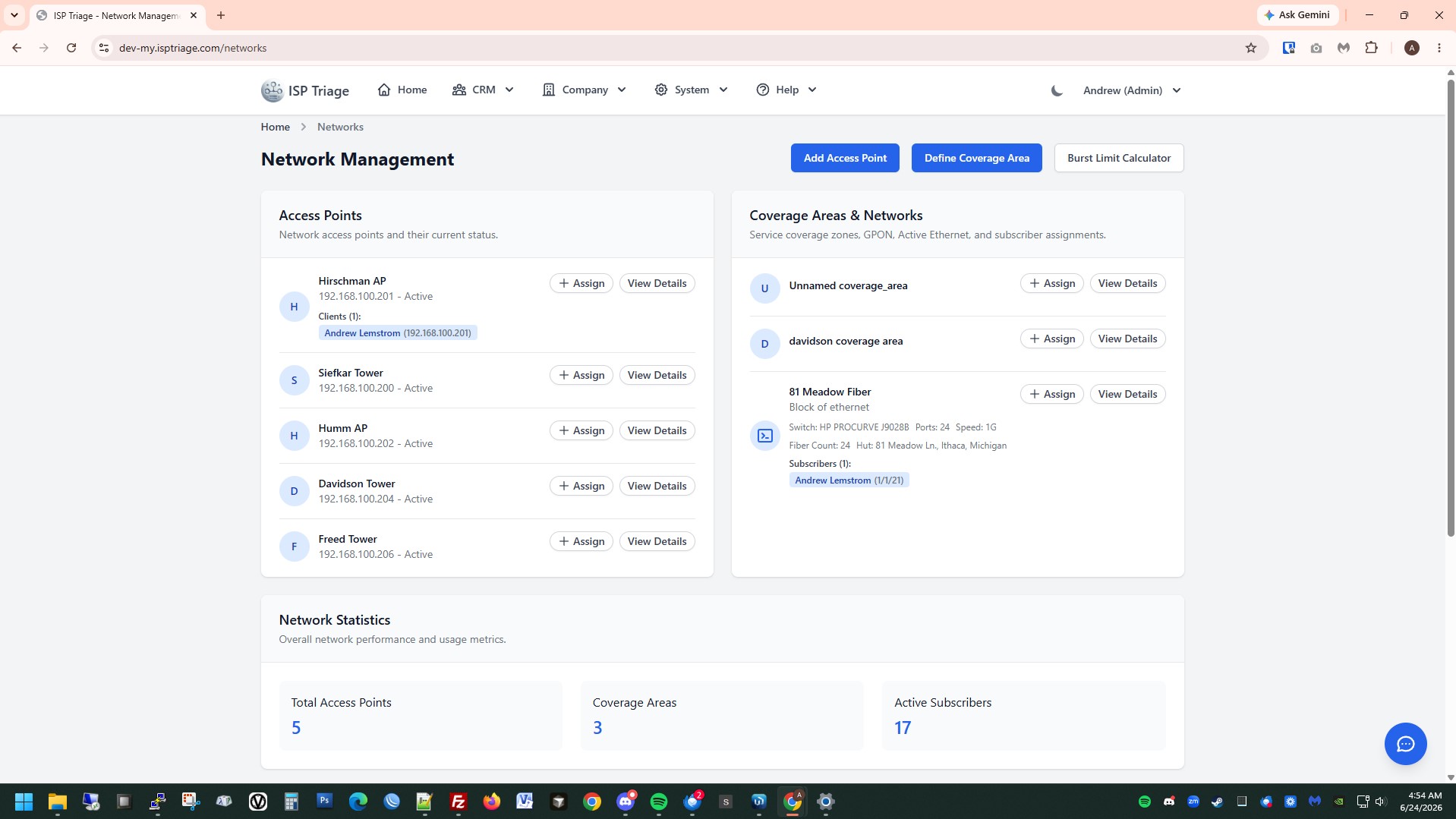
MikroTik-first, with UniFi and Cambium growing — not generic telecom software that ignores PPPoE and plant docs.
Follow the subscriber lifecycle — from billing through auth, gear, plant, support, and quality.
The front office starts here — leads, services, and recurring revenue on the same record that later hits RADIUS and routers.
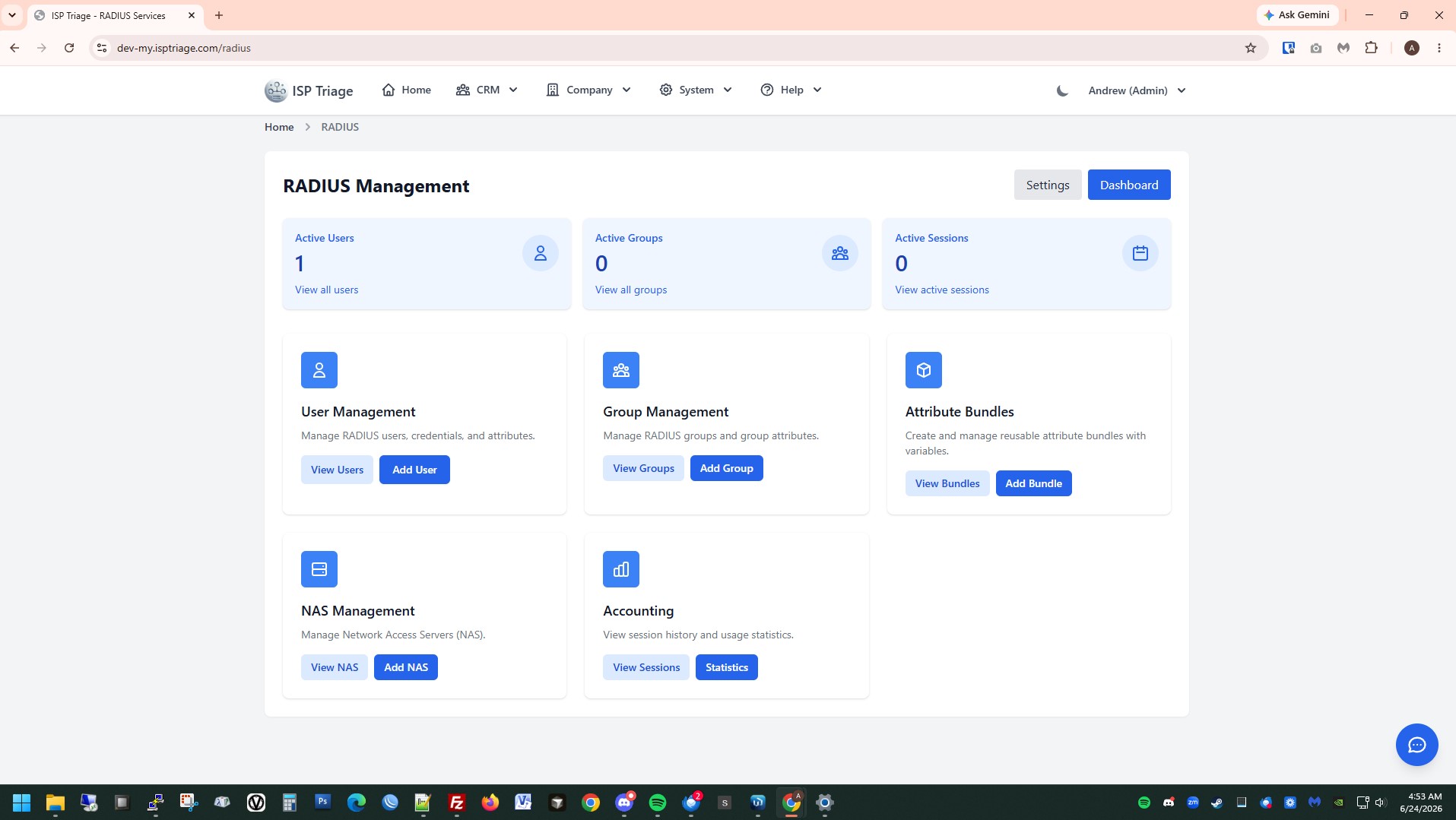
When a service activates or suspends, FreeRADIUS and the customer record stay in sync — sessions, queues, and access follow the bill.
Control gear from the CRM instead of hopping box-to-box. Depth varies by vendor — we are transparent about what is production-ready today.
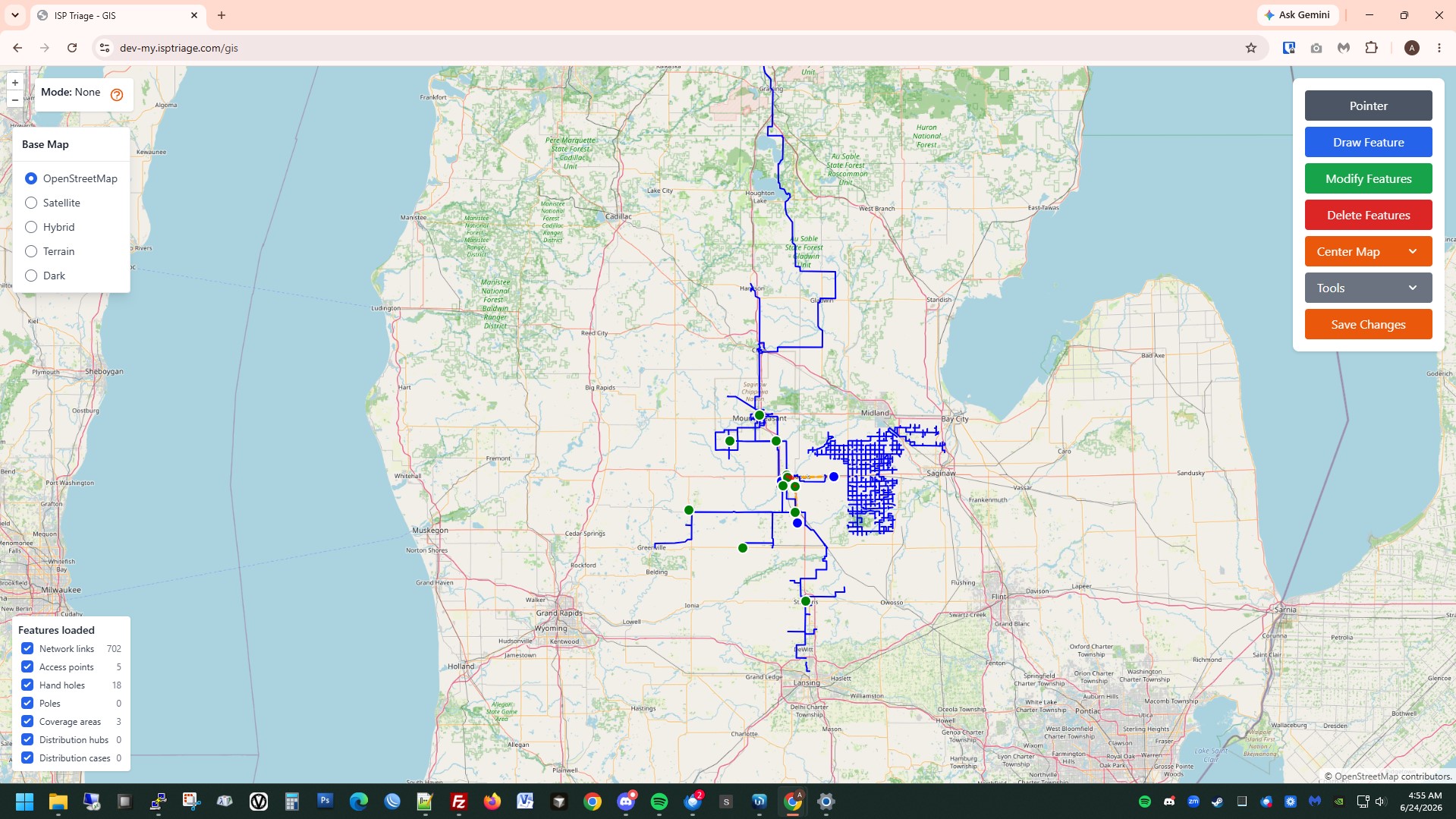
Plant documentation lives next to the subscribers who sit on that fiber, wireless, or copper path.
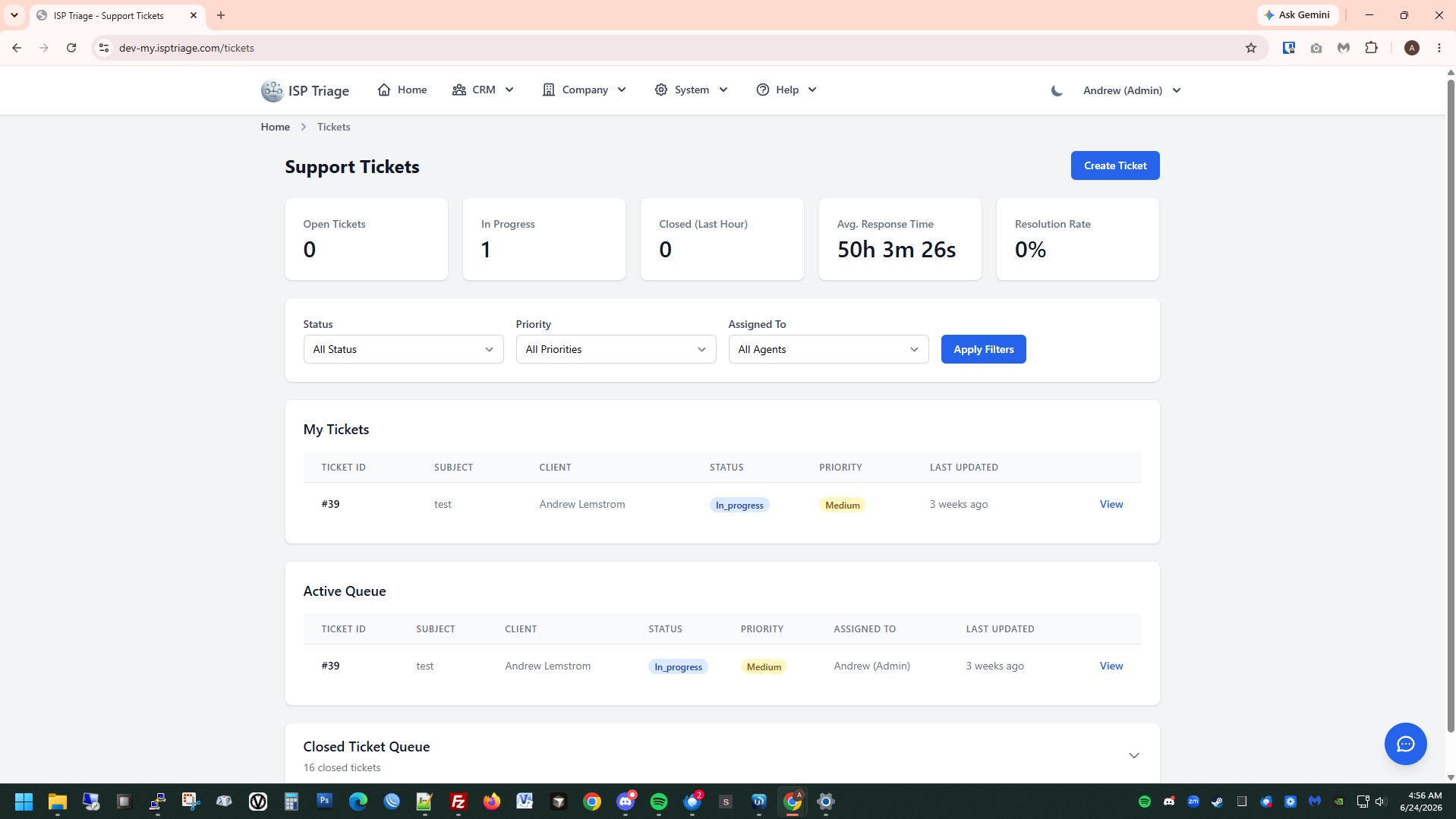
Tickets and truck rolls open against the same customer and network context your billing and RADIUS already know.
Close the loop: quality problems become tickets before they become cancellations.
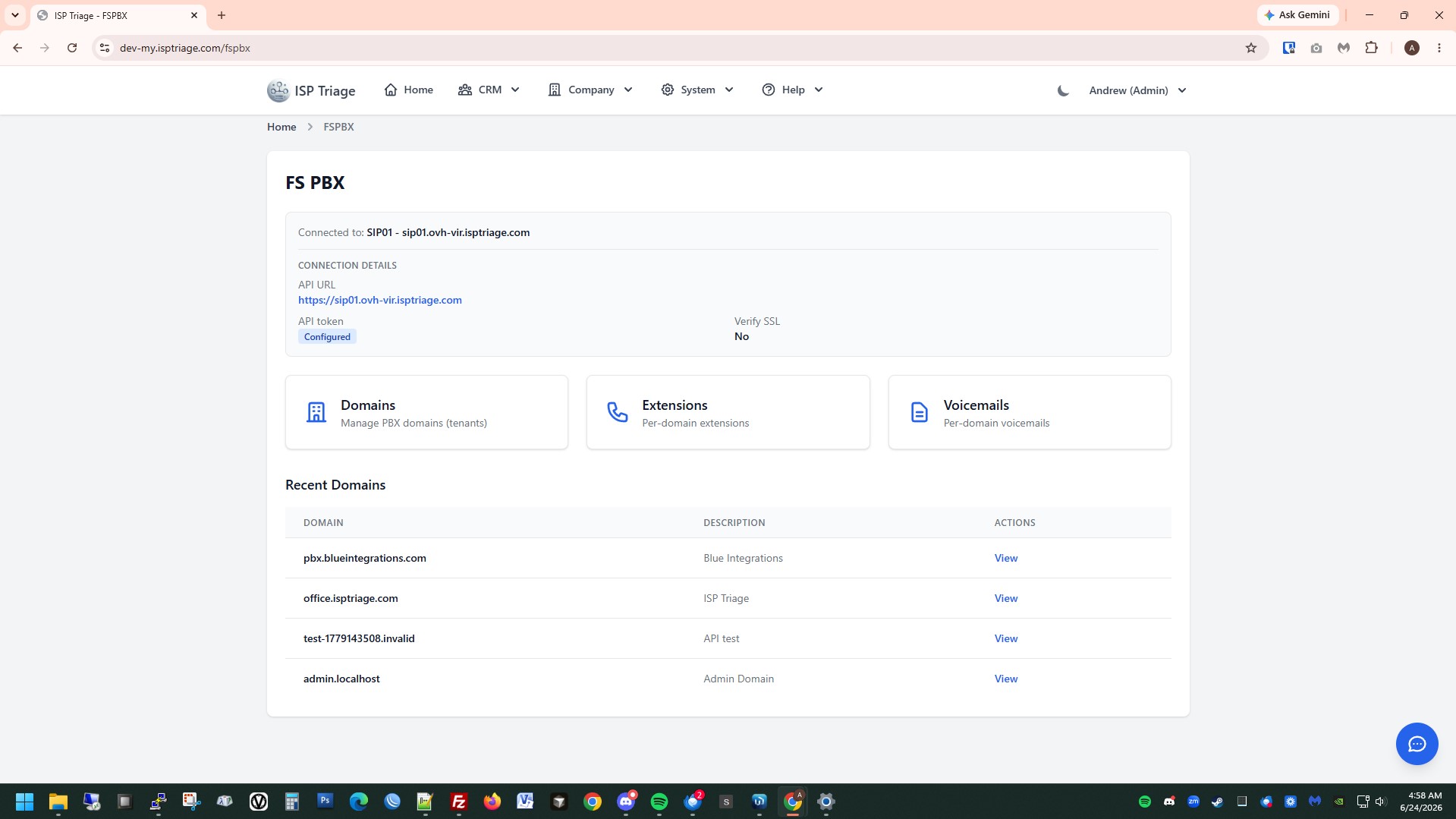
Extend the subscriber record into services operators already sell — voice, DNS, and mail — without a separate admin stack.
We orchestrate proven open and commercial infrastructure — not a black-box rewrite — unified with CRM, billing, and network control.
AAA, live sessions, CoA/disconnect, and MikroTik/Cambium vendor attributes.
Authoritative DNS tied to subscriber and service records.
FreeSWITCH-based telephony provisioning and VoIP service workflows.
PBX integration in development for multi-tenant voice operators.
Email hosting, mailboxes, and webmail for subscriber-facing services.
Per-connection QoE scoring and proactive quality alerts.
Teams often evaluate Sonar, Splynx, UISP/UCRM, Powercode, and Gaiia — or stitch FreeRADIUS, PowerDNS, FS PBX, and Modoboa themselves. Here is how ISP Triage lines up.
| Capability | ISP Triage | Sonar | Splynx | UISP / UCRM | Powercode | Gaiia |
|---|---|---|---|---|---|---|
| CRM & subscriber billing | ||||||
| RADIUS (FreeRADIUS-backed) | Partial | Partial | Partial | |||
| MikroTik, UniFi & Cambium control | Partial MikroTik 80% · UniFi 30% · Cambium 20% | Partial | Ubiquiti-focused | Partial | Partial | |
| GIS & plant mapping | Partial | Limited | Partial | Partial | ||
| QoE monitoring (LibreQoS) | — | Partial | — | — | Partial | |
| Ticketing & outage workflows | Partial | |||||
| FS PBX, PowerDNS & Modoboa | Partial | Partial | Limited | Partial | Partial | |
| MSP network engineering (same team) | — | — | — | — | — |
Capability labels reflect typical product scope as of 2026 and vary by plan, deployment, and integrations. Book a demo to walk through your stack.
Most clients start with network engineering — design, break/fix, migrations — then adopt the CRM when they want one system. The platform is optional; the expertise is not.
Walk through billing, RADIUS, gear, and QoE with an engineer who has run the same gear.
Book a platform demoSubscribe for product updates and ISP operations insights.